

I'm too talented to keep creating for free
I have a very 'I'm leaving here with something' mindset about my work now


The idea of “monetizing your brand” used to give me the ick in the deepest way.
When I first started going viral, I had many people tell me that I needed to start making money off of my social media presence. But the idea of making money over something that was so simple for me to create, especially when most times I was going viral on accident, literally caused a visceral aversion inside of me.
Even though it was clear I was good at something and the people wanted more of it, it felt wrong to try and turn it into money.
And that feeling kept popping up when I had to set rates for brand partnerships, my merch, or create budgets for my projects. Anytime I hosted an event or a show, I immediately wanted everything to be free thinking it was enough if people just showed up.
Everything about connecting my work or my brand to money, gave me the ick.
Until very recently when I got sick of seeing my account dip into the negative just to create something I was going to end up giving away for free. Someone wasn’t doing the math right and it was me.
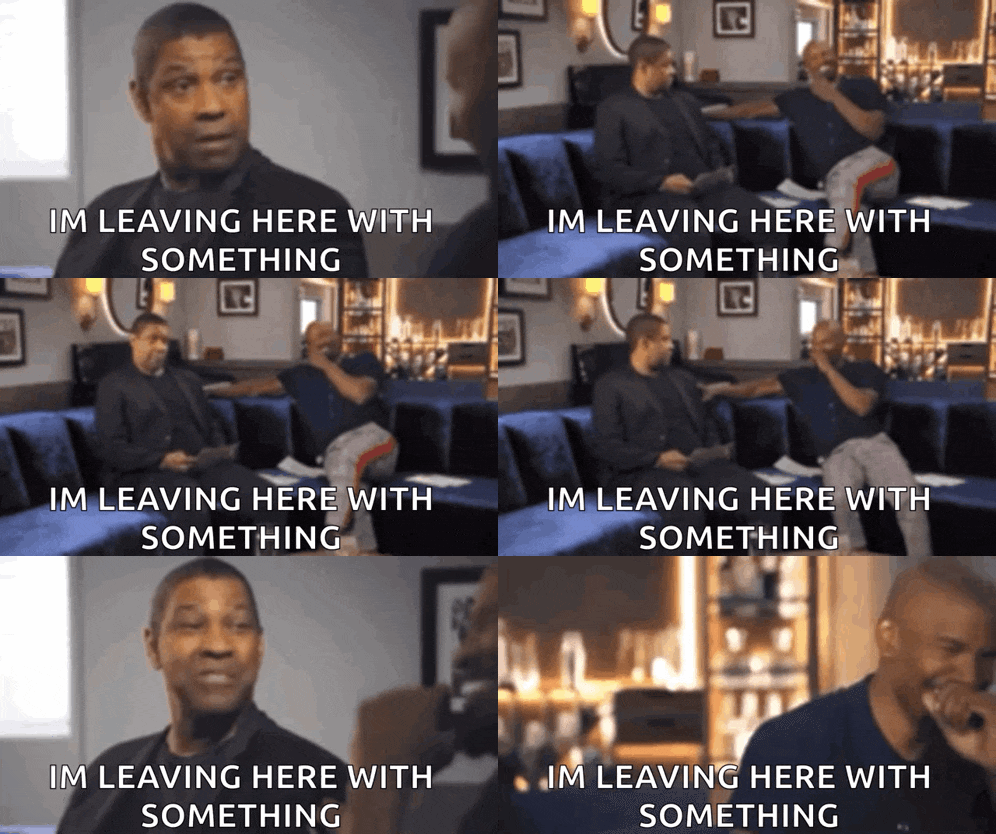
So, 2026 became the start of me deciding that for everything I do or create moving forward, I’m leaving here with something.
I had already started monetizing my brand years ago, but this time I had a completely different motivation and strategy. It wasn’t just about doing whatever it took to see an instant financial return, it was about positioning my community for a deeper, more consistent relationship with me and the world I’m building.
Because I actually am from around the way like Denzel, and the days of me leaving empty handed are done.
But first, why monetize and does everyone need to do it?
Monetizing your personal brand simply means turning your influence and community reach into revenue streams. Most of us think of content creation or selling courses when we think about monetizing, but it also means how you gradually prepare your community to one day buy into something bigger that you’re building.
So whenever you drop that album or your debut book, they’re actually excited about it with you.
Being intentional about this gives you more control over how you’re able to reach people, outside of the demands of an algorithm or industry rules. And that’s the real reason why I’m focused on it now.
This is not something everyone needs to do, so please have discernment around this advice. But in my case, community built organically around me after years of sharing online and being an artist. So this next step is just an extension of the work I’ve always been preparing for.
But let’s get to the root of why I was so afraid to ask for money, even when the proof of my worth has always been there.
It was hard for me to place value on the work that came “easy” for me
There’s a quote by Quincy Jones that goes “if you do it for the money, God walks out of the room”, referring to how once artists start creating specifically for money, the spirituality and purity of creating is no longer there.
And I do agree with this—to an extent.
Sitting down and creating anything specifically for the money is an immediate creative block and feels disingenuous, but creating with money in mind is where artistry can be scaled. This is a fine balance that we’re still not talking loudly enough about.
The reason the idea of monetizing felt hard for me, is because artists are not supposed to think about the money. Even though you’re spending hours and thousands of your own dollars to create a thing, there’s still this embedded idea that art is for the public and thus should be free or as accessible as possible.
There’s also this feeling that because creativity came “easy” for me, that it couldn’t be something that could turn into money. It didn’t feel like strenuous work all the time, so I didn’t apply a dollar amount to it. Now I know that creativity IS emotional, intellectual, strategic work—and it’s work that I’m very good at and should be seeing a return on.
That scarcity mindset will ruin the potential of your pockets
My fear of asking people for money is absolutely connected to growing up without a lot of it. If you come from a household where every single dollar was counted, or you felt the hard effects of not having enough of it, your relationship with money is already skewed in everything.
If you never had enough, it’s hard to believe you ever will.
Financial trauma was (and is) behind a lot of my fears around expecting to be paid for the things that I’m good at. Honestly, the thing that started to break me out of this was embracing my journey as the founder of GROWN Media.
Once my media company started to grow, and I accepted my identity as both an artist and a founder, I started thinking about business differently. The way them expenses started falling in my lap, and I HAD to start thinking about money.
Ironically, it was a lot easier to think about money and the creative work I was doing for GROWN than it was for my personal brand, but it did open my mind to the fact that there was money to be made from my creativity and I deserved to make a lot of it.
We were lied to about where the money resides in creative industries
Another reason I found it acceptable not to have expectations around money and my work, is because we’ve all been lied to about creative industries as financial machines.
“There’s no money in art” is something we’ve all heard at some point as a tool to discourage us from pursuing creative careers but this is a lie. There are millions, billions even, flowing through the entertainment, art, media, marketing, tech industries, etc that rely on creative work, that money is just intentionally not trickling back down to artists.
And because we’re not set up to understand where the money comes from, along with the ‘starving artist’ mentality that often pushes us to accept anything, we’re not pulling the curtain back on this truth enough.
As an independent artist, yes—that money feels impossible to make. But it’s not as impossible when you own creative IP, have ownership of a creative system, and have the demand from a community for more of it.
Un-shameless plug: helping multi-hyphenates navigate this balance is largely why I built GROWN Studios. Let’s chat if you’re feeling stuck.
Okay so… how did I actually monetize?
A breakdown of my plans for a six-figure year, my CRM funnel, and my fifteen revenue streams—yes fifteen.